Best Museums in Paris (2025): Top 5 & Expert Guide
Anyone who’s tried to plan a Paris itinerary in under an hour already knows the problem: there are too many museums and not enough time. With more than 130 museums in the city and the Louvre alone drawing 8.9 million visitors in 2023, picking which ones to visit can feel like a high-stakes puzzle. This guide cuts through the noise with a curated, data-backed look at Paris’s best museums for different travel styles.
Museums in Paris: 130+ · Most visited museum: Louvre (9.6 million annual visitors) · Oldest museum: Louvre (opened 1793) · Best for impressionist art: Musée d’Orsay · Free admission days: First Sunday of each month (select museums)
Quick snapshot
- Louvre is the world’s most visited museum (Statista (visitor data analytics))
- Musée d’Orsay holds the largest impressionist collection (The Weithouse (Paris travel guide))
- City of Paris museums drew 5.1 million visitors in 2025 (Paris.fr (City of Paris official site))
- Exact opening hours after renovations at several museums are not yet confirmed (Actualitix (French tourism data))
- Temporary exhibition schedules shift quarterly — check individual museum sites (Actualitix (French tourism data))
- Attendance data varies because some counts include free entries while others track only paid admissions (Actualitix (French tourism data))
- Louvre: 9.1M (2014) to 8.9M (2023) — steady top ranking (French Moments (France travel resource))
- City of Paris museums surged past 5.1M in 2025 — up sharply from prior years (Paris.fr (City of Paris official site))
- Musée d’Orsay attendance held steady around 3.7–3.9M (Statista (visitor data analytics))
- Advance booking remains essential for Louvre, Orsay, and Orangerie
- Paris Museum Pass offers skip-the-line access to 60+ museums
- Free first Sunday continues for national museums — plan around crowds
Six key facts about Paris museums — one pattern: flagship state museums dominate attendance, but city-run institutions are catching up fast.
| Metric | Value |
|---|---|
| Number of museums in Paris | 130+ |
| Most visited museum | Louvre (9.6 million in 2024) |
| Oldest museum | Louvre (opened 1793) |
| Best for impressionist art | Musée d’Orsay |
| Free admission days | First Sunday of each month (select museums) |
| Average museum ticket price | €12–15 |
What are the top 5 museums in Paris?
- Louvre: world’s most visited, home to Mona Lisa and Venus de Milo (Statista (visitor data analytics))
- Musée d’Orsay: largest impressionist collection anywhere (The Weithouse (Paris travel guide))
- Musée de l’Orangerie: Monet’s Water Lilies in oval rooms (Full Suitcase (travel blog))
- Musée Rodin: The Thinker and a sculpture garden (Full Suitcase (travel blog))
- Les Catacombes: underground ossuary with 6 million skeletons
Louvre Museum
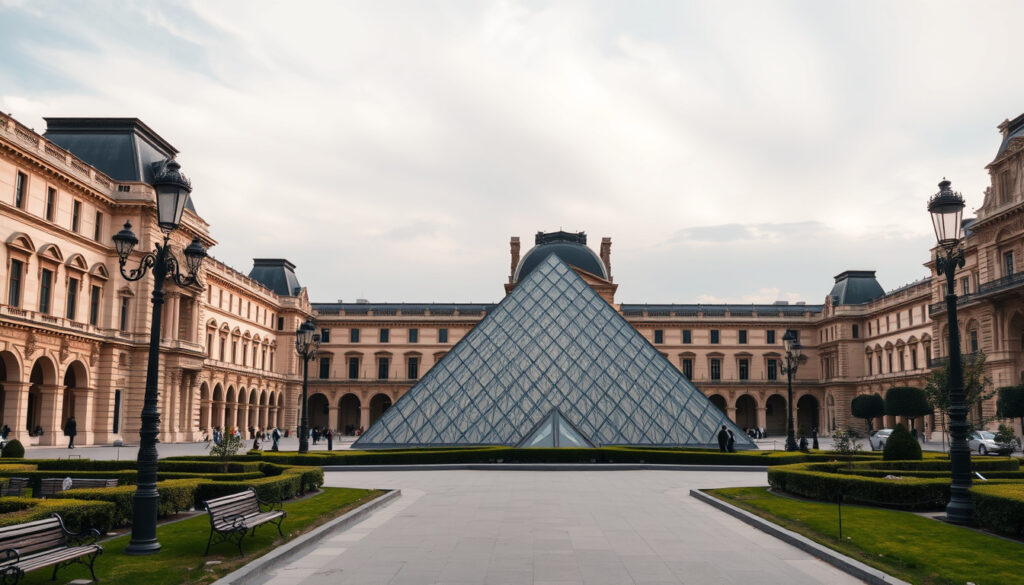
With 8.9 million visitors in 2023, the Louvre is not just Paris’s most visited museum — it’s the most visited museum on the planet, according to Statista (visitor data analytics). The collection spans from ancient civilizations to 19th-century European painting, anchored by Leonardo da Vinci’s Mona Lisa and the Venus de Milo. The building itself, a former royal palace, stretches over 72,000 square meters of gallery space. The catch: even with timed entry, expect queues. The trade-off is unmatched breadth, but visitors with limited time may find the sheer scale overwhelming.
First-time visitors who prioritize scope over intimacy will find the Louvre essential. For those who prefer focused collections, Musée d’Orsay or Musée Rodin may offer a more rewarding experience.
Musée d’Orsay
Housed in a converted Beaux-Arts railway station, the Musée d’Orsay holds the world’s largest collection of impressionist and post-impressionist art. Works by Monet, Renoir, Van Gogh, and Degas fill the vast hall, and attendance sits around 3.7 to 3.9 million annually (Statista (visitor data analytics)). The Weithouse (Paris travel guide) calls it “one of the best museums in Paris” for good reason — the collection is deep, the building is stunning, and a 2–3 hour visit covers the highlights comfortably. The implication: for art lovers who want masterpieces without the Louvre’s crowds, Orsay is the clear alternative.
Musée de l’Orangerie
Just a 10-minute walk from the Louvre, the Musée de l’Orangerie offers a focused, meditative experience. The main draw: Monet’s eight massive Water Lilies murals installed in two oval rooms designed by the artist himself. Full Suitcase (travel blog) singles it out for a “compact visit” that delivers an outsized emotional punch. The lower gallery houses impressionist works by Renoir, Cézanne, and Picasso. At €12.50 entry, it’s one of the most affordable flagship experiences in the city.
Musée Rodin
Set in the 18th-century Hôtel Biron with a sprawling sculpture garden, the Musée Rodin showcases the work of Auguste Rodin, including The Thinker and The Gates of Hell. Full Suitcase (travel blog) describes it as a “quieter, sculpture-focused choice compared with the larger flagship museums.” The garden alone justifies the visit — it’s a rare calm spot in central Paris. The pattern: smaller scale, higher intimacy, and a fraction of the queue time.
Les Catacombes
Not a museum in the traditional sense, but the Catacombs of Paris draw huge crowds for a reason: 6 million skeletons arranged in underground tunnels stretching 1.5 kilometers. Entry is €29, and the experience is stark, eerie, and unforgettable. Editorial guides consistently rank it among the top Paris attractions for visitors seeking something beyond paintings and sculpture. Why this matters: the Catacombs represent a different kind of cultural encounter — one that trades art for raw history.
Which museums in Paris are best for history?
- Musée de l’Armée: military history from medieval times to WWII, housed at Les Invalides
- Musée Carnavalet: the complete history of Paris itself (Paris.fr (City of Paris official site))
- Mémorial de la Shoah: France’s major Holocaust memorial and museum
- Musée d’Archéologie Nationale: prehistoric and ancient artifacts
Musée de l’Armée (Invalides)
The Musée de l’Armée covers French military history from the Middle Ages through both World Wars, all housed within the monumental Hôtel des Invalides. The collection includes armor, weapons, uniforms, and Napoleon’s tomb beneath the golden dome. It appears consistently in Paris top-visitor lists alongside the Louvre and Orsay, according to French Moments (France travel resource). The trade-off: heavy focus on French military history — visitors seeking broader European history may want to supplement with other sites.
Musée Carnavalet
Dedicated to the history of Paris, from its Gallo-Roman origins through the French Revolution to the 20th century, the Musée Carnavalet is housed in two connected Renaissance mansions in the Marais. The City of Paris highlighted it as one of its most popular museums in 2025, alongside the Petit Palais and the Museum of Modern Art, according to Paris.fr (City of Paris official site). The catch: the collection is vast and can take 3–4 hours to see properly. The implication: Carnavalet is essential for anyone who wants to understand Paris itself, not just its art.
Mémorial de la Shoah
France’s primary Holocaust memorial, located in the Marais, combines a museum, a documentation center, and a memorial wall listing the names of 76,000 deported Jews from France. The permanent exhibition traces Jewish life in Europe before and during the Holocaust, with a focus on France’s role. The pattern: quieter, more contemplative, and profoundly important — a complement to the city’s more celebratory cultural sites.
Musée d’Archéologie Nationale
Located in the Château de Saint-Germain-en-Laye, a 30-minute RER ride from central Paris, this museum traces human history from the Paleolithic to the early Middle Ages. The collection includes the iconic “Lady of Brassempouy” mammoth-ivory figurine, one of the oldest known representations of a human face. The trade-off: the commute cost is balanced by a world-class collection that most tourists miss.
Are there any free museums in Paris?
- National museums: free on the first Sunday of each month (permanent collections)
- Always free: Musée d’Art Moderne de la Ville de Paris, Petit Palais (Paris.fr (City of Paris official site))
- Under 18s and EU residents under 26: free at most national museums
Permanent collections of national museums are free on first Sunday of each month
Most national museums — including the Louvre, Musée d’Orsay, and Musée de l’Orangerie — offer free admission to their permanent collections on the first Sunday of each month. The catch: these are also the busiest days of the month. Paris.fr (City of Paris official site) notes that free-ticket allocation is limited, so arriving early is critical. The implication: plan for a 7:30 AM queue or skip the free day and pay for a calmer experience.
Free museums: Musée d’Art Moderne, Petit Palais
The Musée d’Art Moderne de la Ville de Paris and the Petit Palais are always free for their permanent collections. The Petit Palais, built for the 1900 World’s Fair, houses the City of Paris’ fine art collection with works by Rembrandt, Fragonard, and Courbet. The City of Paris reported that these museums saw a strong surge in 2025, with over 5.1 million visitors across all city-run museums (Paris.fr (City of Paris official site)). Why this matters: two excellent free options mean a cultural Paris day can cost zero euros.
Free admission for under 18s and EU residents under 26
All national museums offer free entry to visitors under 18, regardless of nationality, and to EU residents aged 18–25. This covers the Louvre, Orsay, Orangerie, Rodin, and more. The trade-off: temporary exhibitions usually require a paid ticket even when the permanent collection is free. For families, the savings are substantial — a family of four visiting the Louvre could save €68.
What are the best museums in Paris for kids?
- Cité des Sciences et de l’Industrie: hands-on science museum with a planetarium
- Musée de la Chasse et de la Nature: taxidermy and hunting artifacts
- Musée en Herbe: interactive art space designed for young children
- Louvre: family trails and workshops (Louvre (official museum site))
Cité des Sciences et de l’Industrie
Located in Parc de la Villette, the Cité des Sciences is Europe’s largest science museum. The permanent exhibition covers space, robotics, genetics, and the human body, with interactive stations at every turn. The Géode cinema — a giant mirrored sphere showing IMAX films — is a highlight for kids and adults alike. The pattern: this is a full-day destination, not a quick stop, and it works best for ages 6 and up.
Musée de la Chasse et de la Nature
The Museum of Hunting and Nature, in the Marais, offers a quirky collection of taxidermy, hunting weapons, and art about the relationship between humans and animals. It’s unusual enough to captivate kids who find traditional art museums boring. The trade-off: the subject matter may be too intense for very young children, but older kids and teens tend to love the curiosity-cabinet atmosphere.
Musée en Herbe
Designed specifically for children aged 3 to 11, the Musée en Herbe is an interactive art space where kids can touch, play, and create. Exhibitions cover topics like contemporary art, fashion, and design through hands-on activities. The implication: for parents of toddlers and preschoolers, this is the most child-friendly museum in Paris.
Louvre (with family-friendly tours)
The Louvre offers family trails, storytelling workshops, and dedicated family zones. The “Mona Lisa” trail, for example, turns the search for da Vinci’s masterpiece into a treasure hunt. The Louvre’s official family program includes free activity booklets at the information desk (Louvre (official museum site)). The catch: the sheer size of the museum can overwhelm kids — limit visits to 90 minutes with a focused trail.
What do experts recommend for museums in Paris?
- Lonely Planet: Musée d’Orsay, Louvre, Les Catacombes (The Weithouse (Paris travel guide))
- Time Out: Palais de Tokyo, Centre Pompidou for contemporary art
- Reddit community: Musée Rodin, Musée Marmottan Monet
- Everyday Parisian: 5 lesser-known museums off the tourist trail
Lonely Planet’s top picks
The travel publisher’s Paris guides consistently rank the Musée d’Orsay, Louvre, and Les Catacombes as the top three must-see museums. The Weithouse (Paris travel guide) echoes this, calling the Musée d’Orsay “one of the best museums in Paris, with a stunning collection of impressionist art.” The pattern: experts favor Orsay over Louvre for first-time visitors because of its focused collection and manageable size.
Time Out’s curated list
Time Out Paris emphasizes offbeat and contemporary options alongside the classics. The Palais de Tokyo — Europe’s largest contemporary art center — is a recurring pick for its cutting-edge exhibitions and late-night openings. The Centre Pompidou, with its inside-out architecture and Musée national d’Art moderne, draws around 3.2 to 3.3 million visitors annually (Wikipedia (collaborative encyclopedia)). The implication: for travelers who’ve done the classics, Time Out’s list offers the next layer.
Reddit community favorites
The r/Paris and r/travel communities frequently recommend Musée Rodin and Musée Marmottan Monet as alternatives to the big flagships. Musée Marmottan, in particular, holds the world’s largest collection of Monet paintings — over 300 works — and draws far smaller crowds than Orangerie or Orsay. The pattern: Reddit users consistently trade popularity for peace, prioritizing smaller collections with world-class works.
Everyday Parisian’s hidden gems
The local blog Everyday Parisian recommends five lesser-known museums for travelers who want to escape the crowds: Musée Jacquemart-André (19th-century mansion with fine art), Musée de la Vie Romantique (Romantic-era literary salon), Musée Gustave Moreau (Symbolist painter’s studio), Musée Nissim de Camondo (decorative arts in a 1911 mansion), and Musée Cognacq-Jay (18th-century art in the Marais). The trade-off: these smaller museums require more effort to reach but reward with intimacy and absence of queues.
Six leading Paris museums, one comparison: breadth versus focus, crowd size versus intimacy, and price versus value.
| Museum | Entry price | Best for | Visit time |
|---|---|---|---|
| Louvre | €17 | Classical art, Egyptian antiquities, Renaissance painting | 3–4 hours minimum |
| Musée d’Orsay | €16 | Impressionist and post-impressionist art | 2–3 hours |
| Musée de l’Orangerie | €12.50 | Monet’s Water Lilies, compact impressionist collection | 1–1.5 hours |
| Musée Rodin | €13 | Sculpture, garden, Rodin’s studio | 1.5–2 hours |
| Les Catacombes | €29 | Underground ossuary, unique historic experience | 1–1.5 hours |
| Centre Pompidou | €15 | Modern and contemporary art, panoramic views | 2–3 hours |
“The Musée d’Orsay is one of the best museums in Paris, with a stunning collection of impressionist art.”
— Lonely Planet editor
“For a quirky experience, head to the Palais de Tokyo for contemporary art.”
— Time Out Paris
“Musée Rodin is my absolute favorite — you can spend all day in the sculpture garden.”
— Everyday Parisian blogger
Paris’s museum scene offers something for every travel style, but the choice comes down to a simple trade-off. The Louvre is unmatched in scope but demands half a day and patience with crowds. The Musée d’Orsay delivers world-class impressionist art in a fraction of the time. The smaller museums — Rodin, Orangerie, Marmottan, Jacquemart-André — reward those who seek quality over quantity. For the budget-conscious, the first Sunday free program and always-free Petit Palais prove that a great cultural day in Paris need not cost a cent. For families, the Cité des Sciences and Musée en Herbe provide interactive experiences that rival any art collection. The bottom line: Paris has more great museums than any traveler can see in a week. The best strategy is to pick two or three that match your interests, book ahead, and leave room for wandering.
Frequently asked questions
How much does it cost to enter the Louvre?
Standard admission is €17 for the permanent collection and temporary exhibitions. Free entry is available on the first Sunday of each month and for visitors under 18 and EU residents under 26.
What is the best time to visit the Louvre?
Wednesday and Friday evening openings (until 9:45 PM) are the least crowded. Early morning on weekdays, right at 9 AM, is the next best option. First Sundays are free but extremely crowded.
Can I buy a Paris Museum Pass?
Yes. The Paris Museum Pass offers skip-the-line access to over 60 museums and monuments, including the Louvre, Orsay, and Centre Pompidou. A 2-day pass costs €56, a 4-day pass €70, and a 6-day pass €85.
How long do I need to visit the Musée d’Orsay?
Most visitors spend 2 to 3 hours covering the impressionist and post-impressionist galleries on the upper floor. Art enthusiasts may want 4 hours to see the entire collection.
Are there discounts for students or seniors?
EU residents under 26 get free entry to national museums. Students outside the EU pay reduced rates (usually €10–12). Seniors (over 60) may receive small discounts at some city-run museums.
Which museums are open late?
The Louvre is open until 9:45 PM on Wednesdays and Fridays. The Centre Pompidou is open until 9 PM (11 PM for exhibitions on Thursdays). The Palais de Tokyo stays open until midnight on select nights.
Is it worth visiting the Catacombs?
Yes, if you are comfortable in confined underground spaces and want a completely different cultural experience. The 1.5 km tunnel contains the remains of 6 million Parisians. Book tickets weeks in advance — they sell out daily.
How do I get to the Musée de l’Orangerie?
The Musée de l’Orangerie is located at the western end of the Tuileries Garden, next to Place de la Concorde. The nearest metro stations are Concorde (lines 1, 8, 12) and Tuileries (line 1).
More related posts
 Is Australia a Continent? Country vs Continent vs Oceania
 Baby White Tail Spider – Identification, Bites & Myths
 Houses for Sale in Palmerston North: Top Sites & Listings
 When is Anzac Day? Date, History & Public Holiday 2025-2026
 เกมสล็อต pglucky88.win ชนะ: Legitimacy and Winning Guide
 Best Air Fryer NZ 2025: Top Picks, Reviews & Tests
 6 feet in cm: Exact Conversion & Common Questions Answered
 What Did Charlie Kirk Stand For? Political Views and Beliefs