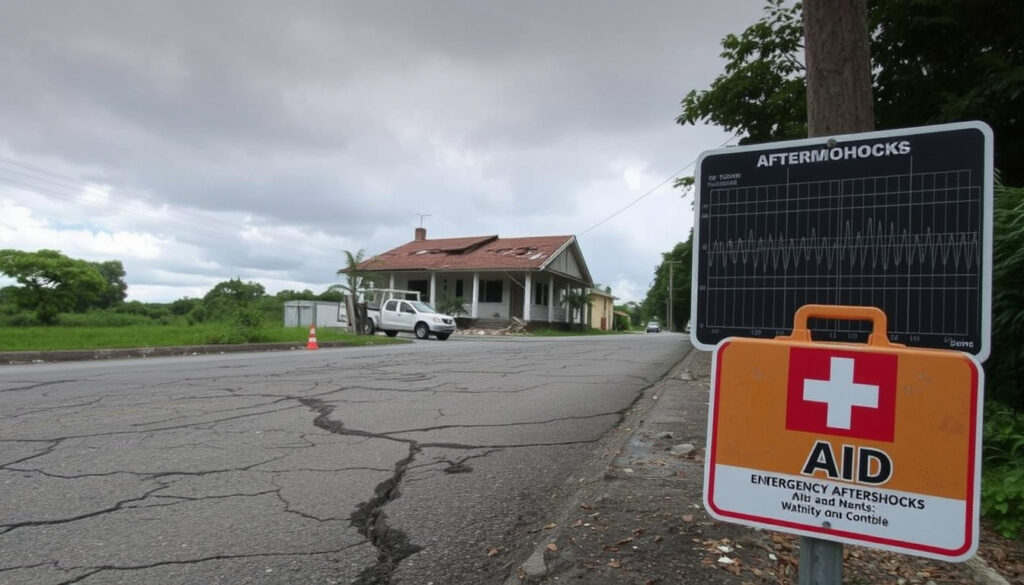
PHIVOLCS Aftershocks Cebu Earthqake: Duraton & Safety
The ground shook in Northern Cebu on September 30, 2025, and weeks later, the earth is still moving. A magnitude 6.9 earthquake struck offshore, and PHIVOLCS has been tracking thousands of aftershocks ever since, revealing a decay pattern typical of major quakes.
Main earthquake magnitude: 6.9 · Date of main quake: September 30, 2025 · Aftershocks recorded (as of Oct 6, 2025): over 7,000 · Aftershock magnitude range: 1.0 to 5.8 · Expected aftershock duration: weeks to months
Quick snapshot
- Magnitude 6.9 earthquake on Sep 30, 2025 (DOST-PHIVOLCS)
- Over 7,000 aftershocks by Oct 6 (Inquirer.net)
- Aftershocks ranged from 1.0 to 5.8 (Manila Bulletin)
- Exact duration of aftershocks (weeks vs months)
- Possibility of a larger aftershock (though unlikely)
- Sep 30: M6.9 offshore quake (Manila Bulletin)
- Oct 6: Over 7,000 aftershocks (Manila Bulletin)
- Oct 11: Nearly 11,000 aftershocks recorded (Manila Bulletin)
- Aftershocks are declining in frequency but continue (Manila Bulletin)
- Residents should remain prepared for weeks (Manila Bulletin)
Six key facts capture the state of the Cebu earthquake sequence as of mid-October 2025.
| Fact | Value |
|---|---|
| Magnitude | 6.9 |
| Date | September 30, 2025 |
| Epicenter | 19 km N 67° E of City Of Bogo (Cebu) |
| Aftershocks recorded | over 7,000 (as of Oct 6, 2025) |
| Expected duration | weeks to months |
How long do aftershocks last after a 6.9 earthquake?
The short answer: they can persist for days to months, depending on the fault system. PHIVOLCS warned on October 1 that aftershocks from the offshore Northern Cebu quake may last for days or even weeks (Manila Bulletin). By October 6, the agency reported that aftershocks were still occurring but becoming less frequent (Manila Bulletin).
Are aftershocks stronger than the first earthquake?
- No, typically they are smaller. The mainshock’s magnitude 6.9 is the largest event; aftershocks have ranged from magnitude 1.0 to 5.8 (Manila Bulletin).
- The strongest aftershock recorded so far was magnitude 5.1 (Manila Bulletin).
- It is very rare for an aftershock to exceed the mainshock.
The pattern: as energy releases gradually, aftershocks decay in both frequency and size. PHIVOLCS data showed 2,461 aftershocks 32 hours after the quake (Manila Bulletin), then 3,036 by the afternoon of October 2 (Philstar.com). By October 5, that count had climbed to 5,982 (Philstar.com), and by October 6 morning, it surpassed 7,000 (Inquirer.net).
When was the last time Cebu has an earthquake?
The September 30, 2025 magnitude 6.9 earthquake is the largest to hit Cebu in recent memory. While the region has experienced smaller tremors historically, this event stands out for its magnitude and the intense aftershock sequence that followed. PHIVOLCS recorded 722 aftershocks within the first 12 hours (DOST-PHIVOLCS), and the sequence continued for weeks.
The implication: Cebu’s fault systems are active, and residents should not assume a long quiet period. The aftershock count reached 10,914 by October 11 (Manila Bulletin), and 12,079 by October 14 (Manila Bulletin).
Do a bunch of small earthquakes mean a big one is coming?
Not necessarily. After a large quake, most recorded earthquakes are aftershocks. Many small events do not signal a bigger one; they are the crust settling. However, seismologists monitor for patterns that could indicate a potential larger event.
How likely is the big one earthquake to happen?
- The “Big One” in the Philippines typically refers to a magnitude 7.2+ quake along the West Valley Fault near Metro Manila, not Cebu.
- The Cebu sequence is separate; the fault system offshore Northern Cebu is not directly linked to the West Valley Fault.
- PHIVOLCS has not issued any warning suggesting a larger event is imminent for Cebu.
The pattern: aftershocks are a normal part of the earthquake cycle. For Cebu residents, the immediate concern is continued moderate aftershocks, not a “big one” in the usual sense.
What is the biggest earthquake ever recorded?
The largest earthquake ever recorded was a magnitude 9.5 that struck Chile in 1960. It generated massive tsunamis and is the benchmark for extreme seismic events.
Has there ever been a 10.0 earthquake?
- No. The logarithmic nature of the magnitude scale means a 10.0 would require a fault rupture far longer than any known fault.
- For context, a 9.5 releases the energy of about 2.2 billion tons of TNT — a 10.0 would be ten times larger.
- Such an event is considered physically improbable on Earth.
Comparing the Cebu quake to the largest ever helps put its magnitude into perspective. A 6.9 is strong enough to cause damage and trigger thousands of aftershocks, but it is far from the planet’s most powerful events.
What should I do during an earthquake?
The universal recommendation for areas with building standards like the Philippines is “Drop, Cover, and Hold On.”
What should never be done during an earthquake?
- Do not run outside — falling debris is the top killer.
- Do not stand in doorways (modern advice says get under a sturdy table instead).
- Do not use elevators or light switches.
What kills in an earthquake?
- Most deaths and injuries are caused by falling objects (ceiling tiles, furniture, glass) and collapsing structures.
- In the Cebu context, many buildings are reinforced concrete; the risk is from non-structural elements.
What is the safest place during an earthquake?
- Inside a building: under a sturdy desk or table, away from windows and exterior walls.
- If outside: move to an open area away from buildings, utility poles, and trees.
- If driving: pull over to a clear spot and stay in the vehicle.
Earthquake safety steps for Cebu residents
- During an aftershock: Drop, Cover, and Hold On immediately. Stay indoors.
- After shaking stops: Check for injuries and hazards (gas leaks, broken glass).
- Stay informed: Monitor PHIVOLCS updates via their official website and social media.
- Prepare: Have an emergency kit with water, food, flashlight, and a battery-powered radio.
- Secure furniture: Anchor heavy items to walls to reduce falling risks during moderate aftershocks.
Timeline: Cebu earthquake aftershock sequence
- September 30, 2025: Magnitude 6.9 earthquake hits offshore Northern Cebu. PHIVIDES reports 722 aftershocks by next morning.
- October 1, 2025: PHIVOLCS warns aftershocks may last for weeks (Manila Bulletin).
- October 2, 2025: Aftershock count reaches 2,461 (morning) and 3,036 (afternoon) (Manila Bulletin).
- October 5, 2025: Nearly 6,000 aftershocks recorded (Philstar.com).
- October 6, 2025: Over 7,000 aftershocks; strongest at magnitude 5.1 (Inquirer.net).
- October 8, 2025: 9,188 aftershocks, 38 felt (The Star).
- October 11, 2025: 10,914 aftershocks, magnitudes 1.0–5.1 (Manila Bulletin).
- October 14, 2025: 12,079 aftershocks, magnitudes 1.0–5.8 (Manila Bulletin).
Aftershock frequency decreased over time, but the total count kept climbing. The largest aftershock (5.8) came two weeks after the main quake, a reminder that moderate shaking can persist.
Confirmed facts vs. what’s unclear
Confirmed facts
- Main earthquake magnitude 6.9 on September 30, 2025
- Aftershock count over 7,000 by Oct 6, exceeding 12,000 by Oct 14
- Aftershock magnitudes range 1.0–5.8
- PHIVIVOLCS installed temporary seismic stations
What’s unclear
- Exact duration of aftershocks (weeks vs months)
- Possibility of a larger aftershock (though unlikely)
- Long-term impact on building safety in Northern Cebu
What PHIVOLCS is saying
“Aftershocks could last for weeks and possibly months.”
PHIVOLCS, via Philstar.com
“The magnitude 6.9 earthquake has generated over 7,000 aftershocks.”
PHIVOLCS, via Inquirer.net
“Aftershocks had magnitudes ranging from 1.0 to 5.8.”
PHIVOLCS, via Manila Bulletin
“Recorded 4,071 aftershocks as of 10 a.m. yesterday.” (Oct 2)
PHIVOLCS, via Philstar.com
For residents of Northern Cebu, the message is clear: stay prepared, keep your emergency kit accessible, and treat every aftershock seriously. The ground may continue to tremble for weeks, but the data from PHIVOLCS shows a normal decay pattern. The trade-off: awareness beats anxiety. Knowing what to expect can help families make calm, safe decisions.
mb.com.ph, phivolcs.dost.gov.ph, mb.com.ph, earthquake.phivolcs.dost.gov.ph, mb.com.ph
Frequently asked questions
How often do aftershocks occur after a magnitude 6.9 earthquake?
Initially, hundreds per day; after two weeks, dozens per day. The rate decreases over time but can spike with a moderate aftershock.
Can aftershocks trigger another large earthquake?
Very rarely. Aftershocks are a result of the mainshock, not a cause. The chance of a larger event is statistically low.
What is the difference between an aftershock and a foreshock?
A foreshock occurs before the mainshock; an aftershock follows it. Both are smaller than the main event.
Why do aftershocks happen?
They occur as the crust adjusts to the stress change caused by the main earthquake.
Are buildings in Cebu safe for aftershocks?
Modern reinforced concrete buildings are generally safe for moderate shaking, but older structures may be at risk. PHIVOLCS advises checking for cracks after strong aftershocks.
How does PHIVOLCS monitor aftershocks?
They use a network of seismic stations, including temporary stations deployed after the main quake, to detect and locate each event.
What should I prepare for ongoing aftershocks?
Prepare an emergency kit, secure heavy furniture, and have a communication plan with family. Stay informed via trusted sources.
More related posts
 Profit and Loss Template: Free Downloads & Step-by-Step Guide
 Car Repair Near Me: Costs, Intervals & Trusted Mechanics
 Contents Insurance NZ Calculator: Free Online Tools
 New Balance Running Shoes Reviews 2026: In-Depth Guide & Top Picks
 Gardens by the Bay Singapore: Tickets, Light Show & Tips
 Trailers for Sale NZ – Best Deals, Types, Prices & Buyer’s Guide
 How to Redeem Roblox Gift Cards: Step-by-Step Guide (2025)
 The Rock Orchestra by Candlelight: 2026 Ireland Tour, Reviews