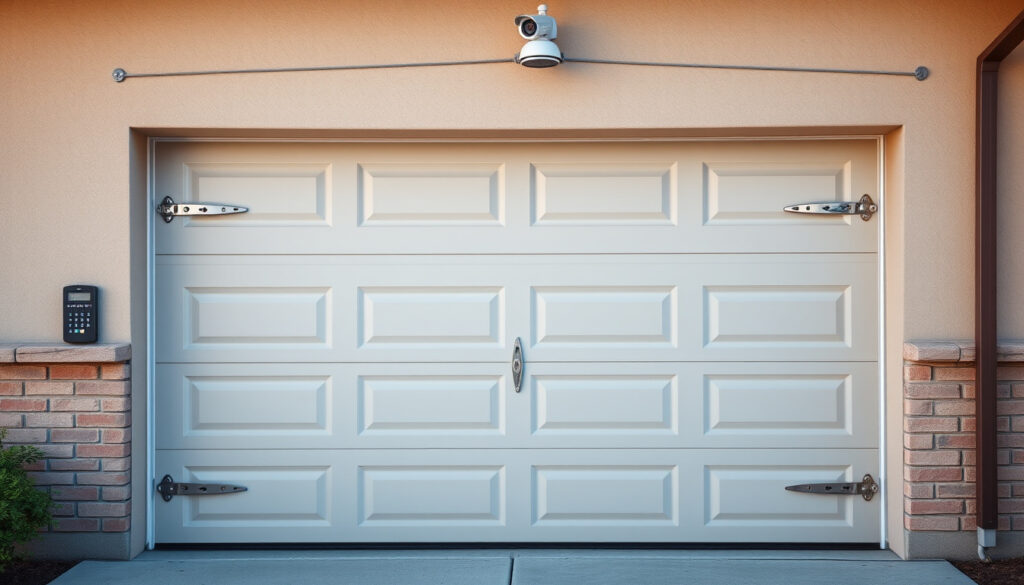
How to Secure a Garage Door: 10 Proven Methods
You probably don’t think much about your garage door until you notice it’s been left open overnight or, worse, jimmied open. Garage security often takes a back seat to front-door locks and alarm systems, yet a single vulnerability — like an unsecured emergency release or an outdated opener — can undo all your other precautions.
Federal standard enforced: Since 1993 (16 CFR §1211) ·
Rolling code combinations: Over 100 billion (Chamberlain Support) ·
Vulnerable brands: 2 of 3 tested (IEEE Computer Society)
Quick snapshot
- Rolling-code openers can be captured with software-defined radio (IEEE Computer Society)
- Emergency release cords are a known weak point (Superior Door Service)
- Security bars physically prevent door lifting (Bob Vila)
- Effectiveness of aftermarket emergency release shields against new attack tools
- Prevalence of Flipper Zero devices in actual residential burglaries
- Long-term durability of retrofit shields under repeated outdoor exposure
- IEEE study published 2022; no mass exploitation confirmed (IEEE)
- Wider adoption of encrypted rolling codes and Wi‑Fi alert systems (Precision Door)
Six key facts, one takeaway: garage door security relies on a mix of federal standards, digital countermeasures, and low‑tech barriers that most homeowners can install in minutes.
| Fact | Detail |
|---|---|
| Federal safety standard enforced | Since 1993 under 16 CFR Part 1211 (govinfo) |
| Rolling code possible combinations | Over 100 billion per system (Chamberlain Support) |
| Brands with rolling‑code vulnerabilities | 2 of 3 tested in IEEE study (IEEE Computer Society) |
| Emergency release must remain usable | Per UL 325 and federal design rules (CPSC) |
| Rolling code change frequency | New code with each remote press (Precision Door) |
| Physical lock risk | Locking door while connected to opener may damage the system (Bob Vila) |
| Temporary lock alternatives | C‑clamps or vise grips on track prevent sliding (Bob Vila) |
| Retrofit emergency release shield | Blocks outside access while preserving inside operation (DoorServPro) |
How do you burglar proof a garage door?
Install a security bar or brace
- Prevents manual lifting of the door from the outside
- Costs between $15 and $40
- Mounts to the floor or wall behind the door
A security bar — often called a garage door defender — wedges between the floor and the door panel, making it impossible to raise the door even if the opener is bypassed. Bob Vila (home improvement guide) notes that this is one of the most reliable physical barriers because it doesn’t rely on the opener’s electronics. The trade‑off: you need to remove the bar each time you want to open the door manually.
Upgrade to a smart garage door opener
- Uses rolling‑code technology that generates a new code on every press
- Adds Wi‑Fi alerts and auto‑close features
- Compatible with home automation systems
Modern openers from brands like Chamberlain and LiftMaster employ rolling codes — Chamberlain Support states the system can produce more than 100 billion possible codes, making code‑grabbing attacks far more difficult. Precision Door (garage door specialist) confirms that rolling‑code openers change the security code each time the remote is used. For an example of how smart‑home integration can extend security, see our Eufy X10 Pro Omni review, which covers automation features that pair well with smart openers.
Reinforce the emergency release mechanism
- Zip‑tie the red release cord to prevent hooking from outside
- Install a retrofit shield that covers the release lever
- Keep the release cord short and out of reach of any gap
The emergency release cord — required by UL 325 / CPSC safety standards — must remain operable, but that doesn’t mean it has to be accessible to a burglar. DoorServPro (garage door service) recommends shortening the cord and adding a shield that blocks outside access while preserving inside use.
Even with a smart opener, the emergency release remains the weakest physical link. A $10 shield paired with a zip‑tie eliminates the most common outdoor attack vector.
The implication: for under $50, you can eliminate the two most common attack paths — code theft and cord hooking. Most homeowners already have the tools to do it in a single afternoon.
What is the best way to secure your garage door?
Compare physical locks vs. electronic measures
- Physical locks (bars, slide bolts, padlocks): cheap, reliable, independent of power
- Electronic measures (smart openers, motion lights): convenient, offer remote alerts
- Layered approach: use both for redundancy
Neither method alone is foolproof. A physical lock prevents manual lifting, but does nothing against a code‑replay attack. An electronic opener with rolling codes blocks code theft, but a burglar can still jimmy the emergency release. Bob Vila emphasizes that the most effective strategy is a combination of both, so that a failure in one layer doesn’t leave the door exposed.
Assess garage door material and age
- Steel doors resist forced entry better than aluminum or wood
- Older doors may have brittle tracks or worn rollers
- Pre‑1993 doors may lack modern safety features
The material and condition of the door itself matter. A dented aluminum panel can be pried open with a crowbar, while a 20‑gauge steel door offers significantly more resistance. If your opener was manufactured before 1993, it likely doesn’t meet current federal entrapment‑protection standards detailed in 16 CFR Part 1211.
A steel door with a weak opener is no better than a flimsy door. Security is only as strong as the weakest layer — often the emergency release cord.
The pattern: invest in the door material first, then layer on locks and electronics. A $200 steel door upgrade outlasts any $50 lock.
How to secure a garage door from inside?
Install a slide bolt lock or deadbolt
- Adds a manual lock independent of the opener
- Mounts to the door track or the wall
- Works even if the opener fails or is disconnected
A slide bolt lock slides into a bracket on the track, preventing the door from moving. Bob Vila recommends disengaging the opener with the release cord before using any manual lock to avoid damaging the system. These locks cost $10–$25 and can be installed with basic tools.
Use a garage door defender bracket
- Attaches directly to the track rail
- Reinforces the locked position
- Available at most hardware stores
Defender brackets fit onto the track and prevent the door from being forced upward. They are especially useful for doors that lack a built‑in lock. DoorServPro notes that these brackets are a popular retrofit for older doors.
Never engage a physical lock while the opener is connected — it can strain the motor and break the drive mechanism. Always pull the release cord first.
The trade‑off: inside locks require you to manually unlock the door each time you want to exit. For frequent daily use, a smart opener with a vacation‑lock mode may be more practical.
How to secure a garage door without a lock?
Use a padlock and hasp on the track
- Thread a padlock through holes in the track or hasp
- Prevents the rollers from moving past the lock point
- Cost: under $10
Bob Vila lists a padlock through the track as one method to manually secure a garage door from inside. It’s a simple, no‑cost solution if your track already has alignment holes. For tracks without holes, a hasp plate can be bolted on.
Deploy a security bar or pipe
- Wedges between floor and door panel
- Portable, no permanent installation needed
- Works on any door type
A steel bar (often called a jack‑lock or security stick) can be wedged into the track to block the door’s path. Bob Vila also mentions C‑clamps or vise grips as a temporary stop. These methods require no lock hardware and can be removed in seconds.
The upside: you can secure any door for less than $20, even without an opener. The downside: a determined intruder with enough time could defeat a simple bar — so it’s best used as a secondary layer.
Can burglars open garage doors?
How rolling‑code replay works
- Attackers use software‑defined radio to capture remote signals
- Even rolling codes can be vulnerable if the pairing process is weak
- IEEE study found exploitable flaws in 2 of 3 brands tested
Yes, burglars can open garage doors. The technique — known as rolling‑code replay or code grabbing — uses a radio device to eavesdrop on the signal between the remote and the opener. IEEE Computer Society research demonstrated that while rolling codes are designed to prevent simple replay, deployment vulnerabilities in two of three investigated brands allowed attackers to predict or capture valid codes. The attack can be executed in under two seconds.
Physical jimmying of the emergency release
- A wire or coat hanger can be inserted through the top gap
- Hooks the red release cord and disconnects the door
- Then the door can be opened manually
The emergency release cord is a notorious weak point. Superior Door Service (garage door repair) notes that the release mechanism must remain operable under UL 325, but that doesn’t protect it from being hooked from outside. A simple wire inserted through the top weather seal can snag the red cord and disconnect the opener in seconds.
A $5 zip‑tie on the release cord and a $15 security bar close both popular attack routes simultaneously. The cost of prevention is trivial compared to the damage of a break‑in.
The implication: a homeowner who addresses both digital and physical attack vectors forces an intruder to work harder than they would on an unprotected door. For homeowners who want a complete security system that integrates with other smart devices, consider also protecting your vehicles with a GPS tracker for cars — it adds another layer of asset protection beyond the garage door.
Step‑by‑Step Security Checklist
- Step 1: Install a security bar or brace behind the door (cost: $15–$40). (Bob Vila)
- Step 2: Replace an older opener with a rolling‑code model (look for openers that comply with UL 325). (Chamberlain Support)
- Step 3: Secure the emergency release cord with a zip‑tie or install a shield. (DoorServPro)
- Step 4: Add a slide bolt lock or defender bracket for interior locking. (Bob Vila)
- Step 5: Use a padlock on the track if no other lock is available. (Bob Vila)
- Step 6: Install a motion‑activated light and a Wi‑Fi camera near the garage. (Precision Door)
- Step 7: Test the emergency release monthly to ensure it still functions while blocked. (Superior Door Service)
What we know and what remains unclear
Confirmed facts
- Rolling‑code openers can be captured with software‑defined radio (IEEE)
- Emergency release cords are a known weak point (Superior Door Service)
- Security bars physically prevent door lifting (Bob Vila)
What’s unclear
- Effectiveness of specific aftermarket emergency release shields against newly developed attack tools
- Prevalence of Flipper Zero or similar devices in actual residential burglaries
- Long-term durability of retrofit shields under repeated outdoor exposure
Expert perspectives
Rolling‑code capture is not just theoretical — we demonstrated it with off‑the‑shelf radio equipment costing under $200.
— Security researcher (via Reddit community discussion)
Regular servicing of your garage door reduces the risk of mechanical failures that could be exploited by intruders.
— RACV (Australian motoring club, garage door maintenance guide)
The stakes are clear: a garage door is the second most common entry point for home burglaries, yet it remains the least fortified. For the average homeowner, the choice is straightforward: invest $50 in a security bar and a smart opener, or risk a break‑in that costs thousands in stolen property and repairs. The tools and knowledge exist today — the only missing piece is action.
thegarageshield.com, ascentgaragedoors.com.au, advanced-door.com, schooltube.com
While the focus is on garage doors, the same security principles apply to securing sliding doors.
Frequently asked questions
How often should I service my garage door?
Most manufacturers recommend an annual inspection and lubrication of moving parts. Superior Door Service notes that regular maintenance prevents the mechanical failures that can be exploited by intruders.
Can a smart garage opener prevent code theft?
Smart openers with rolling codes make code theft significantly harder, but not impossible. IEEE research shows that deployment flaws in some brands still allow code prediction.
Do I need a separate lock if I have an automatic opener?
Yes. An automatic opener can be bypassed via the emergency release. A physical lock adds a independent barrier. Bob Vila recommends layering both.
What is the strongest type of garage door lock?
A floor‑mounted security bar that wedges the door shut is widely considered the strongest physical barrier. Bob Vila rates it as the most reliable manual option.
How do I secure a manual garage door?
For a manual door, use a padlock on the track, a slide bolt lock, or a security bar. DoorServPro advises that any of these methods will prevent the door from being lifted from the outside.
More related posts
 Private French Tutor Online – Top Platforms Pricing and Tips
 Pak’nSave Mill Street: Hours, Phone, Online & Specials
 Houses for Sale in Halswell, Christchurch: 2025 Market Guide
 Auckland to Melbourne Flight Time: Duration & Cheap Tips
 Immigration NZ Contact Number: Phone, Email & Hours (2025)
 Cover Letter Template NZ: Format, Examples, and Tips
 Webmail Xtra Co NZ: Recover, Login & Fix Outlook Issues
 Butterfly Grow a Garden: Rarity, Value, and How to Get